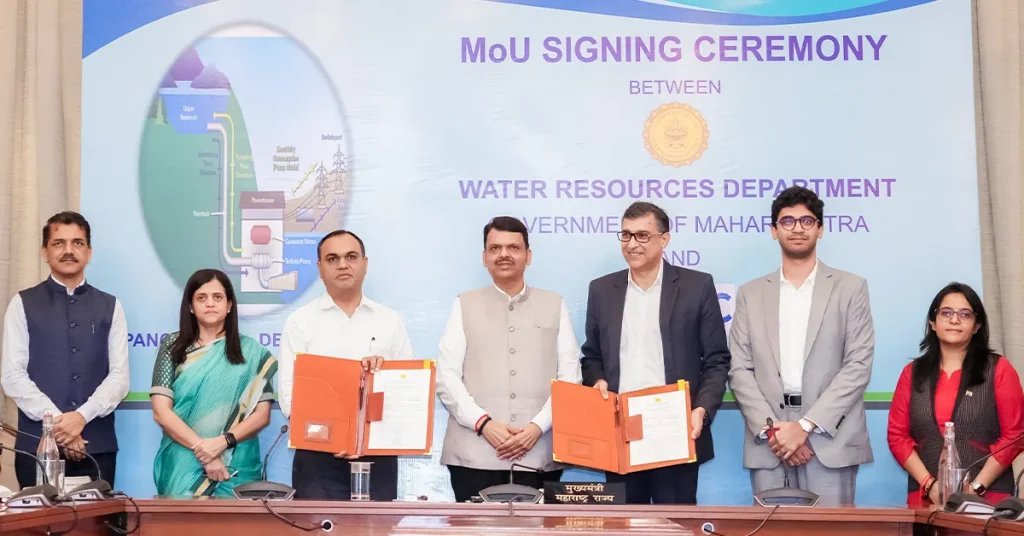
Maharashtra is the first state to adopt an energy transition plan with a target of generating 50% of its energy from green/renewable sources by 2029. The Udanchan (Pumped Storage) Hydropower Projects can play a significant role in achieving this goal, especially given Maharashtra’s natural advantage in the Sahayadri mountain range, and the reservoirs made in the lap of it. Chief Minister Devendra Fadnavis has put special emphasis on the Pumped Storage Hydroelectric Projects as they serve dual goals – power generation and water conservation, through recycling of used water using the topography of the Sahyadri mountain range. The state government has formulated a long-term and effective policy to implement the different components of these projects and create an easy process and fast-track system to attract private investors for the same. All necessary permits, such as licences and clearances for water resources, energy storage, and environmental impacts, have been fast tracked with absolute transparency.
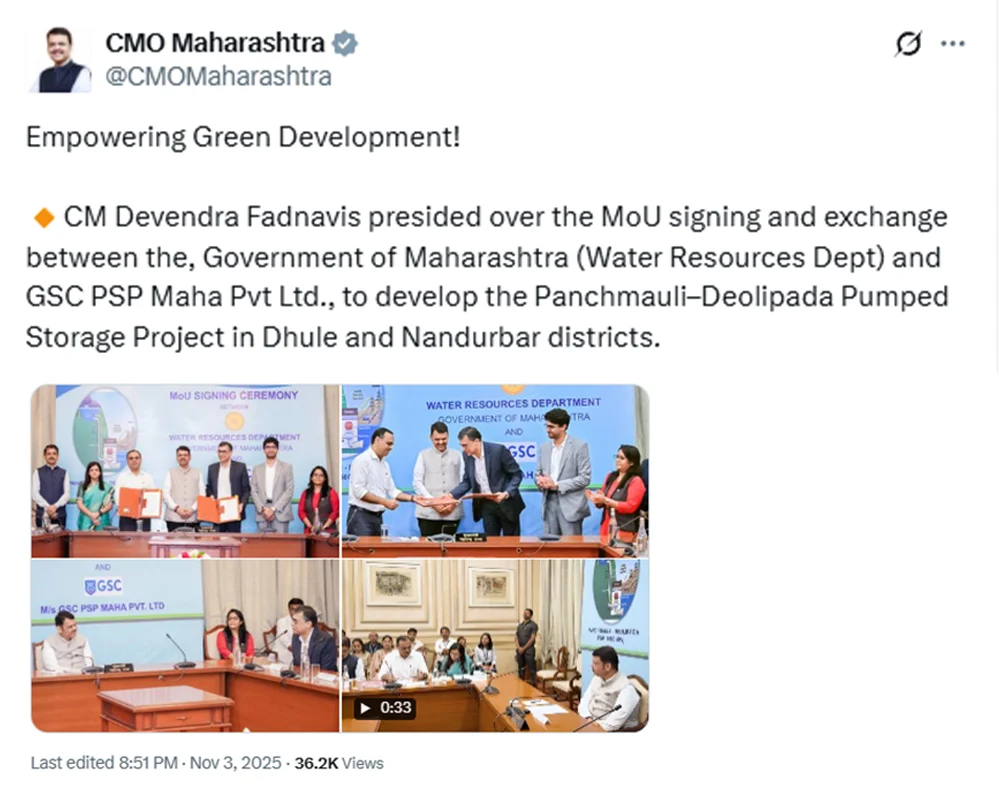
The Panchmauli-Devlipada Udanchan Pumped Storage Hydropower Project spanning Dhule and Nandurbar districts is a major milestone in the state’s green energy transition. The project is being developed under a landmark Memorandum of Understanding (MoU) worth ₹8,000 crore signed between the Maharashtra government and GSC PSP Maha Pvt Ltd, an SPV under the Singapore-based GSC Group. It is designed to generate 1,500 Megawatts of clean electricity, create about 2,500 jobs at the local level, and substantially upgrade the road, electricity, and other infrastructure to connect this backward tribal belt with mainstream markets. As the two reservoirs will function as a closed loop with a large-scale water management infrastructure, the ground water table in these areas will always stay recharged and will aid local agriculture significantly. Also, because this will be a private-owned power generation entity, the use of water resources will be charged at industrial rates. Therefore, besides power generation, this project will generate recurring revenue for the government.
Maharashtra has changed its energy policy to meet the growing energy needs of the state with a renewed focus on inviting large investments in the energy sector. The new policy is fortified with a fast track system to remove obstacles in energy projects in the state. This is giving a complete boost to the state’s water resources, water management and energy production processes.
50 MoUs for Pumped-Storage Hydropower Projects
The Pumped Storage Hydroelectric projects use recycled water, lifted up using solar or wind power. A large volume of power can be generated through this mechanism with the input of limited renewable energy resources. Until now, 50 MoUs have been signed for pumped-storage hydropower projects in the state. The Panchmauli-Devalipada project is the 51st major project. Together these projects are expected to generate approximately 70,315 MW of electricity and attract investments worth ₹3.83 lakh crore. They are also projected to create around 1.14 lakh jobs. The Devendra Fadnavis government has set a target of 1 lakh MW capacity pumped-storage projects to ensure grid stability in the state. This will enable Maharashtra to play a pivotal role in stabilizing the national power grid. Chief Minister Devendra Fadnavis is firmly committed to steering the state toward sustainable development. Under his leadership, Maharashtra is also scripting history in the solar energy sector; Asia’s largest solar power project is currently in progress in the state for a distributed solar energy capacity of 16 gigawatts. All energy requirements for agriculture will be met through solar power. These efforts will reduce conventional power generation in the state while accelerating Maharashtra’s journey towards eco-friendly, sustainable energy production.
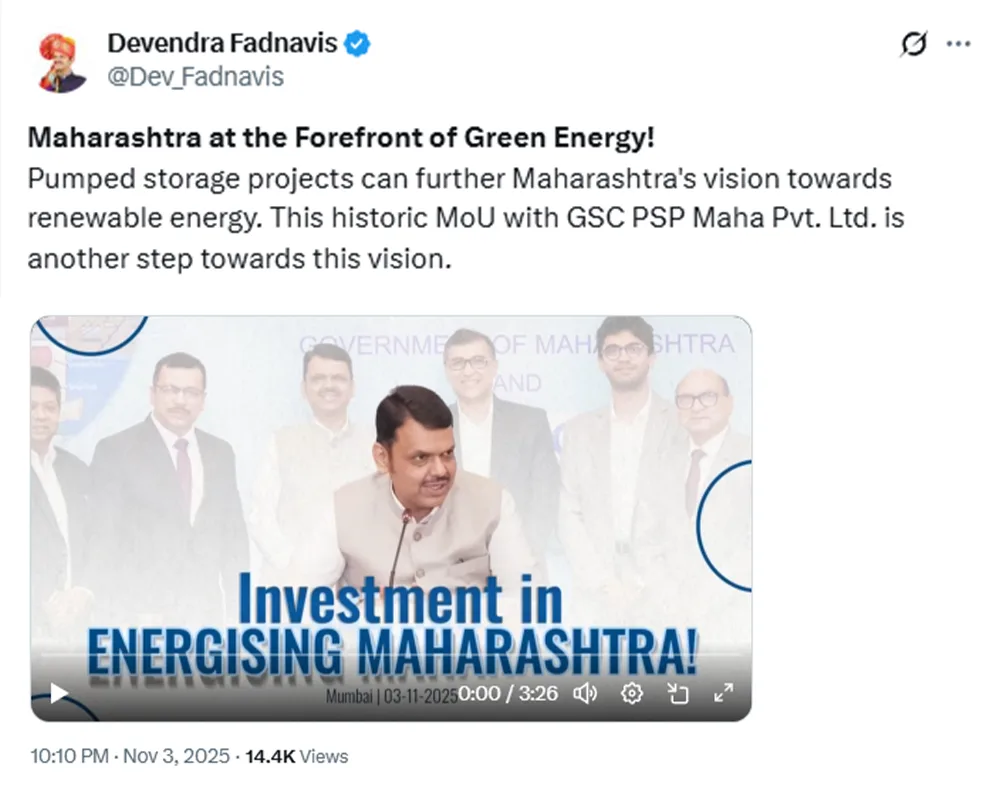
By striking a balance between energy generation and conservation of water resources, Chief Minister Devendra Fadnavis has reaffirmed Maharashtra’s transition towards environment-friendly development.
Related articles: