







































Gadchiroli district in Maharashtra was plagued by the Naxal movement for many years. Many factors,…

सृजनशील विचारांचा प्रवाह स्रोत
Naxalism in Maharashtra, first reported in the early 1980s, has had a bloody history marked by violence and organized armed struggle by tribal communities (Adivasis), stemming from developmental disparities and social discontent. Gadchiroli, Gondia, and parts of Chandrapur have long been the epicenters of Naxalite activities in Maharashtra. While the root cause may be traced to backwardness of these areas, deprivation of the tribals, and utter negligence by the previous governments, the dense forest and hilly terrain, and proximity to the maoist belts in Chhattisgarh made these districts hotbeds for Naxalite movements. The Devendra Fadnavis government after coming to power for the first time in 2014, put up a determined effort to eradicate Naxalism from Maharashtra through a focused, long-term, and multi-pronged approach. This involved stringent security measures on one side and an array of goodwill measures on the other, which included rehabilitation schemes for surrendering rebels, implementation of development schemes, improvement of basic amenities, job creations for local people through industrialization, and so on. Between 2014 and 2025, first as Chief Minister and then as the Home Minister, Devendra Fadnavis adopted a more robust policy against Naxalism and collaborated with the central Home department to make Maharashtra Naxal-free. Under his constant monitoring the critical steps like modernization of security forces, surrender and rehabilitation schemes for Naxalites, and revamping of road and civic infrastructure, education, and health centers were implemented and efforts were taken to create employment opportunities for the people. The sincere efforts of the government with various tribal development schemes to provide health centers, education, and basic amenities, conservation of forest, etc. won the trust of the local population. Parallely, the consistent elimination of Naxalites at the hands of security forces and mass surrenders changed the entire scenario from that of a cloud of fear to sunshine of hope. The declaration by Union Home Minister Amit Shah to make the country Naxal-free by March 2026 has also created a significant psychological impact to cause disarmaments and large-scale surrenders of the Naxalites. Devendra Fadnavis’s single-minded determination finally did what none of his predecessors had succeeded in – freeing the Naxal-ruled districts from the clutches of terror and reversing the lives of the inhabitants from decades of deprivation, negligence, and misguidance to a future of peace, equality, and prosperity.

Central government’s initiatives to curb Naxalism
The central government established a coordination center in Dhule, North Jalgaon division. Under this center, a plan was introduced to induce change in the mindset of Naxalites and encourage them to surrender and make sure they do not return to Naxalism, and also reduce their new recruitment by preventing local people from getting attracted to Naxalism. The plan involved beneficial schemes to encourage Naxalites to surrender. The goal was to motivate Naxalites to surrender and live as responsible, law-abiding citizens. Because the scheme involved financial benefits to surrendered Naxalites, it became crucial to ensure that no one could misuse it by deliberately joining the Naxalites only to surrender and receive benefits. Also the scheme ensured additional rewards for the surrendering Naxalites based on their ranks.
Revised Surrender and Rehabilitation Scheme for Naxalites
The surrender and rehabilitation policy, launched on August 29, 2005, was extended time and again in the following years. Taking into account the new guidelines issued by the central government and the experience gained in implementing the existing scheme, the then Congress-NCP government, through a government resolution dated August 26, 2014, approved the implementation of a revised surrender scheme for Naxalites. The government sanctioned better rehabilitation packages under the new scheme. While the amount of immediate financial incentive was increased, monthly stipend for the surrendered Naxalites was included in the new scheme. Meanwhile, the surrender scheme for Naxalites, which was initially approved by a government resolution in 2005, was extended until August 2015.
The state government has a long-standing surrender and rehabilitation policy, initially launched on August 29, 2005, which has been extended time and again. A revised, more attractive policy was in place during the 2014-2015 period.
Extension of the Surrender and Rehabilitation Scheme for Naxalites
According to a government decision dated August 29, 2005, a surrender scheme for Naxalites was announced in the state. Subsequently, the then state government, after making periodic modifications to the scheme, introduced a revised surrender scheme in August, 2014, valid up to August 29, 2015. Meanwhile, after the election in the state in October 2014, the government led by Devendra Fadnavis came into power. His government extended this scheme from August 29, 2015, to August 28, 2017.
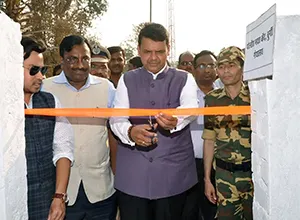
Chief Minister Lays Foundation Stone for Rehabilitation Colony for Surrendered Naxalites
Chief Minister Devendra Fadnavis laid the foundation stone for the Navjeevan Navanagar colony for surrendered Naxalites at Mauja Murkhala near Navegaon on the Chandrapur road on February 25, 2016. This is the first colony in the country for surrendered Naxalites. On this occasion, the Chief Minister interacted with the surrendered Naxalites who received plots and congratulated them on their decision to join the mainstream. The Maharashtra government provided financial assistance, and employment opportunities to Naxalites who gave up violence and the armed struggle in the forests, enabling them to lead a peaceful life. The government’s previous scheme, which was started in 2005, provided the surrendered Naxalites with houses and residential plots. Under this scheme, 5.53 hectares of land was sanctioned for the surrendered Naxalites. A total of 174 plots of 30 x 30 square feet each were earmarked on this site along with 2,769 square meters for an Anganwadi (childcare center), school, and community temple, 513 square meters for a market, and 3,408 square meters of open space. Based on the demand for plots for house construction from the surrendered Naxalites, the Superintendent of Police, Gadchiroli, had distributed plots to a total of 106 surrendered Naxalites.
A police relief center has been established in Bargi (Yelmi) in Etapalli taluka of Gadchiroli district, an area affected by the Naxalite movement. This relief center was inaugurated by Chief Minister Devendra Fadnavis.
60 Surrendered Naxalites Appointed as Conductors in State Transport
The state government launched several initiatives to bring Naxalite youth into the mainstream. As part of this effort, the ST Corporation launched a new scheme called the Birsa Munda Rehabilitation Project Scheme. Under this scheme, the State Transport (ST) Corporation provided jobs of bus conductors to 60 surrendered Naxalite youth. After receiving one and a half months of training, these young people joined the ST as bus conductors. 60 Naxalite youth from Gadchiroli were given jobs by the ST Corporation. The recipients included women as well.
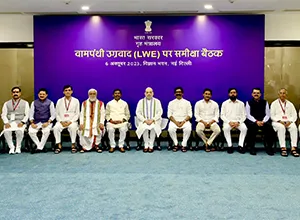
Anti-Naxalism Conference in Delhi chaired by the Union Home Minister
A high-level security review meeting on the Left-Wing Extremism (LWE) was held on October 6, 2023, at Vigyan Bhavan in New Delhi, chaired by Union Home Minister Amit Shah. Chief Minister Eknath Shinde and Deputy Chief Minister and Home Minister Devendra Fadnavis participated in this meeting.
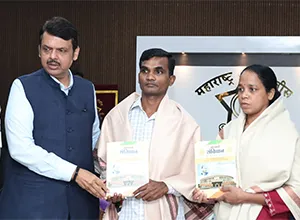
Gathering of Surrendered Naxalites and Interaction with their Families
A program was organized at the Gadchiroli District Police Headquarters for interaction with surrendered Naxalites and their families. Deputy Chief Minister and State Home Minister Devendra Fadnavis attended the program. On this occasion, Naxalites Giridhar and Lalita, who had bounties of Rs. 25 lakh and Rs. 16 lakh respectively on their heads, surrendered in his presence. The government provided the couple with Rs. 25 lakh in assistance for rehabilitation. The government had also provided job opportunities to help the Naxalites integrate into mainstream society and live in a dignified manner. Due to the resolute leadership of Home Minister Devendra Fadnavis and an intensified surveillance and security operations, Gadchiroli and adjoining districts started seeing a decline in Naxalism. Commendable success was achieved in this period that not a single tribal youth in Gadchiroli had taken to Naxalism in the past four years. Home Minister Devendra Fadnavis honored the commandos of the C-60 Squad of Gadchiroli police who risked their lives for the success of the anti-Naxalite operations in Maharashtra.
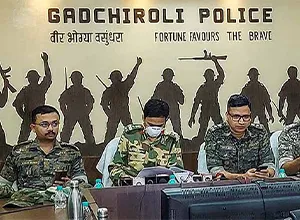
12 Naxalites were killed in Gadchiroli Police operation
Twelve Naxalites were killed in an operation conducted by the Gadchiroli Police near Wandoli village on the Maharashtra-Chhattisgarh border. The police also seized automatic weapons from the scene. The Gadchiroli Police were lauded for this successful operation. This exemplary work by the police force helped in restoring confidence and a feeling of security in the local population.
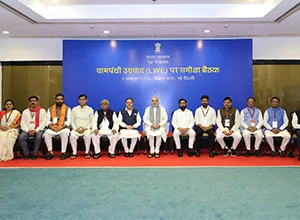
A 10-Year Review of Maharashtra at the Anti-Naxal Conference
Union Home Minister Amit Shah chaired a review meeting on “Security and Development in the Left-Wing Extremism (LWE) Affected States” at Vigyan Bhavan in New Delhi on October 7, 2024. The meeting reviewed Maharashtra’s strong action against Naxalism over the past 10 years. It also highlighted how the Maharashtra government successfully implemented health, education, and employment programs to counter the overarching influence of left-wing Naxalites and win the trust of local residents in the affected districts, often referred to as “Red Corridor.” Maharashtra’s success in breaking the Naxalite supply chain was specially mentioned in the meeting. For the first time, North Gadchiroli had been freed from armed Maoists, which significantly helped in removing fear of terror from the minds of people in this area. The campaign against Naxalism had been intensified in the ten years from 2014 to 2024. The number of armed Naxalite cadres in the state, which was 550 in 2013, declined to just 56 in 2024. In the past six years, 96 armed Naxalites were killed, 161 captured, and 70 surrendered. The Naxalite’s plan to expand from Abujhmad to the MMC zone was defeated. During this period, not a single new recruit joined the Naxalite outfits in Maharashtra. Furthermore, no security personnel were martyred, the conference was informed.
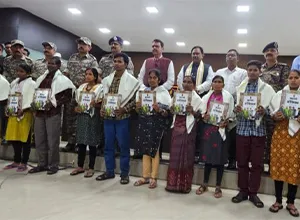
North Gadchiroli free of Naxalism; 11 hardcore Naxalites surrender
After becoming Chief Minister in December 2024, Devendra Fadnavis visited Gadchiroli on the first day of the New Year. During this visit, 11 hardcore Naxalites surrendered in the Chief Minister’s presence. This included Tarakka, a member of the Dandakaranya Special Zonal Committee and wife of CCM Bhupati. The government had announced a reward of ₹1 crore 3 lakh on each of them. Due to this success of the Gadchiroli Police, North Gadchiroli has become Naxal-free. Meanwhile, in the presence of Chief Minister Devendra Fadnavis, 5 buses, 14 four-wheelers, 30 motorcycles, and a helicopter hangar were dedicated to the Gadchiroli Police.
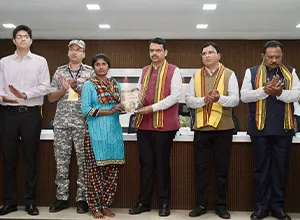
12 Naxalites surrender in Gadchiroli
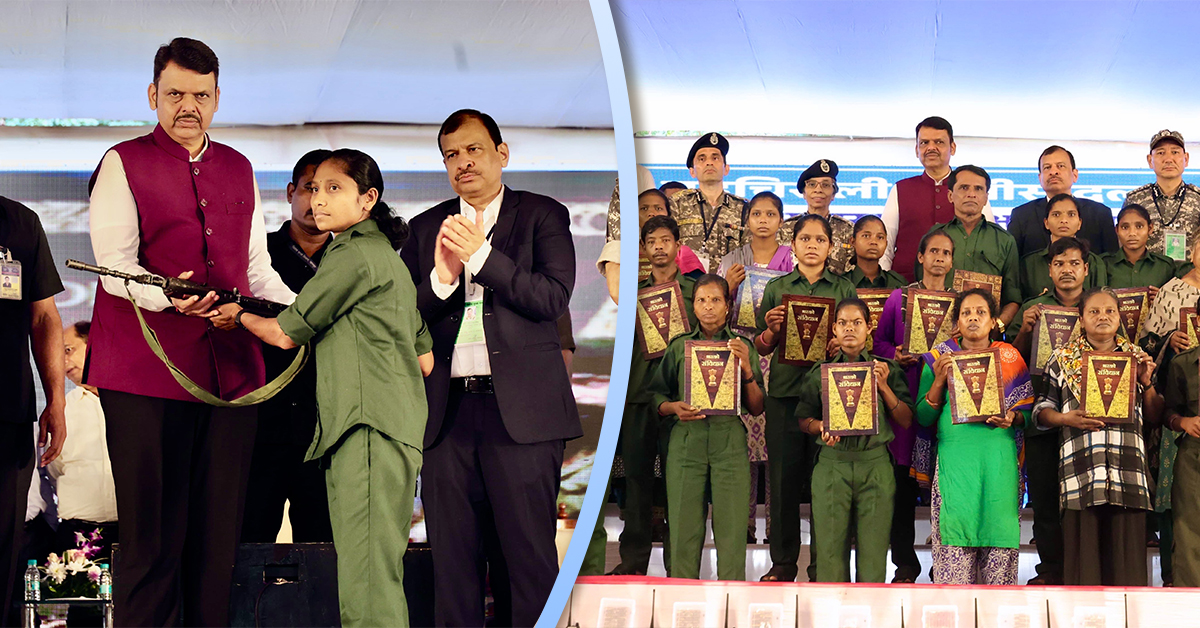
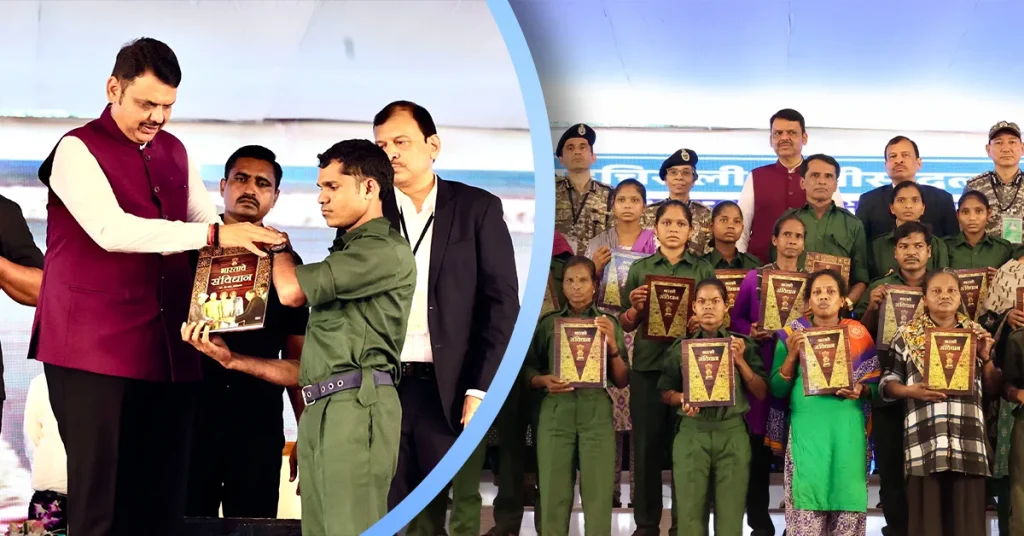
In the presence of Chief Minister Devendra Fadnavis, 12 Naxalites, carrying rewards worth crores of rupees, surrendered in Gadchiroli. To strengthen their faith in democratic values, the surrendered Naxalites were given a copy of the Constitution. The central and state governments also provided financial assistance for their rehabilitation. The surrendered Naxalites included Sapnakka Choudhary, Ramdas alias Chitkuram Halami, Shivlal alias Sukadu Sanku Pada and his wife Pushpa alias Shambatti Nagasai Gauri, Kosa Kumma Kota, Durgi alias Rami Chinna Vedki, Ajay alias Bhima Songdu Muchaki, Savita alias Sunita Bhima Narote, Aruna alias Sonari Yera Talanki, and Dilip alias Sudhakar Karu Mohini, who surrendered with automatic AK-47s and other weapons. Meanwhile, a mass wedding ceremony was held on this occasion for 13 Naxalite couples who surrendered earlier. Chief Minister Devendra Fadnavis was present at the ceremony. He congratulated the couples for choosing the right path and wished them well for their future.
Four dreaded Naxalites killed in C-60 squad operation
Police received information that Naxalites from Gadchiroli’s Gatta Dalam were hiding in the Koparshi forest area on the Gadchiroli-Narayanpur border. Accordingly, 19 C-60 teams and two CRPF QAT teams were sent to patrol the forest. A firing broke out between the police and the Naxalites, which resulted in killing four dreaded Naxalites, including one man and three women. Police also recovered one SLR rifle, two INSAS rifles, and one 303 rifle.
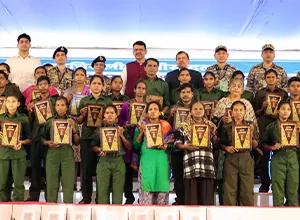
Senior Maoist Surrenders with Weapons
Senior Naxalite leader Mallojula Venugopal Rao, alias Bhupati, along with approximately 60 activists, surrendered in Gadchiroli in the presence of Chief Minister Devendra Fadnavis. Bhupati’s surrender is a major blow to the Naxalite movement. A month before his surrender, Bhupati had published a letter titled “Abhay,” in which Naxalites expressed their readiness for peace talks and a ceasefire. Bhupati, who had been active in expanding the Naxalite organization for the past forty years, had a bounty of over ten crore rupees announced in various states. Bhupati was a member of the Politburo and Central Committee of the Maoist Party. The 69-year-old, with a B.Com degree, was known as a dynamic leader in the Naxalite movement. He was active in the areas bordering Maharashtra and Chhattisgarh. He commanded the states of Chhattisgarh, Telangana, Odisha, and Andhra Pradesh, including Gadchiroli.
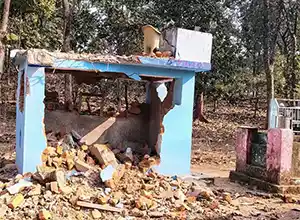
44 monuments of Naxal terror demolished in Gadchiroli; major action by security forces
In a joint operation involving the Gadchiroli Police Force, C-60 Commandos, and the CRPF, 44 monuments, erected by the Naxal groups, inflicting fear and establishing their reign over a vast region in Gadchiroli district were demolished. This destruction of the symbols of Naxal terror was carried out to instill a sense of security among the people in remote areas. In this joint operation, 800 personnel conducted a planned search and inspection campaign. After a thorough inspection, 44 monuments were demolished in the highly sensitive forest areas of Etapalli, Hedri, Bhamragad, Jimlagatta, Dhanora, and Pendhari. The state government’s consistent and determined anti-Naxal policy has significantly transformed the situation in Gadchiroli. Security operations, an effective surrender policy, infrastructure development projects, and growing confidence-building among the local people are fast changing the district’s atmosphere to positive.
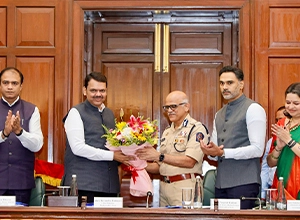
C-60 Squad Personnel to be Honored with Special ‘C-60 Medal’
The Maharashtra Police has achieved a major breakthrough in the fight against Naxalism. The Naxalite movement in the state has been all but eradicated. Over the past few years, personnel of the C-60 commando unit of the Maharashtra police have made an exceptional contribution toward eliminating this threat from Maharashtra. This squad has completely neutralized Naxalite activities in remote regions, including Gadchiroli. In recognition of their extraordinary gallantry, the State Government will honor all personnel and officers who have served in the C-60 Squad for the last three years with a special ‘C-60 Medal’; this announcement was made by the Chief Minister Devendra Fadnavis on Monday (March 30).
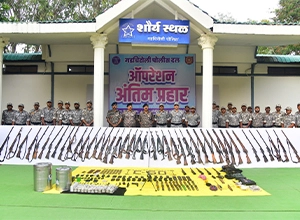
Operation Final Strike Yielded a Major Success: 8 Naxals Arrested, 5 Surrendered
‘Operation Final Strike’, a joint initiative by the Gadchiroli Police and the Central Reserve Police Force (CRPF), has achieved a major breakthrough. Through this operation, eight Naxals, carrying a combined bounty of ₹64 lakh, were arrested. Additionally, five Naxals, carrying a combined bounty of approximately ₹38 lakh, have surrendered. According to police records, six Naxals were active in Gadchiroli, of which one female Naxal, Moni Madavi, was arrested earlier in Chhattisgarh; the remaining five have been apprehended through the ‘Operation Final Strike.’ So, during a press conference held following the operation (on May 16), the Gadchiroli Police announced that, according to their records, not a single active Naxal remained in the district.
The police had earlier asserted that Naxalite activities in the Gadchiroli district had been all but eradicated, because a handful of Naxals were against surrendering and hiding in the jungles. This made the police launch a specialized initiative namely ‘Operation Final Strike’ to hunt them down. Among those arrested are the dreaded extremists who were directly involved in the killing of a C-60 commando during an encounter in the Fodevada forest area in February.
The arrested Naxals had concealed a large cache of arms and ammunition in the Fodevada, Gundenur, and Naitala forest areas. The police recovered this stockpile during a special search operation. The recovered items include 51 firearms, 2 LMGs, 4 AK-47s, 4 SLRs, 3 INSAS rifles, .303 rifles, a BGL launcher, detonators, magazines, and hundreds of live cartridges. Furthermore, the police seized ₹65.34 lakh in cash, also kept hidden in the jungle. In October 2025, 61 Maoists, including Mallojula Venugopal Rao (alias Bhupati, alias Sonu), a member of the Naxal Central Committee and chief spokesperson for the CPI (Maoist), surrendered their weapons in the presence of Chief Minister Devendra Fadnavis. Since then, a total of 1,063 Naxals across the country have surrendered, along with 637 weapons.
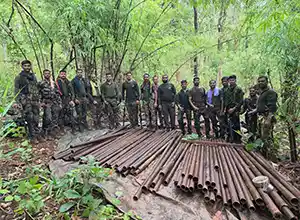
Major action against Naxalites in Gadchiroli
In keeping with the mission of Devendra Fadnavis government to completely eliminate Naxalism from Maharashtra, a major operation was conducted in Gadchiroli jointly by the Gadchiroli Police and CRPF units against some Naxalites. A huge cache of arms manufacturing machinery and material, including 1 lathe machine weighing about 5 to 6 tonnes, 150 claymore and BGL pipes, 220 number 12-bore pipes, 20 rifle rod metal strips and other items, was recovered from the Naxalite hide outs and subsequently destroyed in the Balbera forest area on the Maharashtra-Chhattisgarh border. Chief Minister and Home Minister Devendra Fadnavis congratulated Gadchiroli Police and CRPF personnel for this successful operation.
The Naxal movement was an armed insurgency against social injustice, economic inequality, and the apathy of government for many decades. The journey of Naxalism began with the Naxalbari movement and spread to several states, including Maharashtra. Naxalite activities in Maharashtra were particularly rampant in areas like Gadchiroli, Gondia, and Chandrapur. Against this backdrop, the Maharashtra government rolled out several initiatives, including surrender and rehabilitation schemes, toward obliterating Naxalism. The C-60 squad of Gadchiroli police, carried out close surveillance and actions to defeat the highly organized Naxalite operations. Furthermore, Naxalites’ surrender campaigns were launched to motivate them to shun militancy and integrate into mainstream society. The Devendra Fadnavis government implemented tribal development schemes along with employment generation and infrastructure development to curb Naxalism through development. During Devendra Fadnavis’s tenure as Home Minister, anti-Naxal operations achieved significant success through strengthening internal security as well as rehabilitation. As a result, most of the mass surrendering took place during this period and also the lives of surrendered Naxalites have found a new direction. Under Devendra Fadnavis’s leadership, this fight has reached a decisive turning point. Naxalism is now virtually eradicated in Gadchiroli district. The Chief Minister’s stern warning to the few remaining Naxalites, which says, “Either surrender or get killed,” has made the state’s stance clear and the goal of a “Naxalism-free Maharashtra” almost a reality.
Gadchiroli district in Maharashtra was plagued by the Naxal movement for many years. Many factors,…
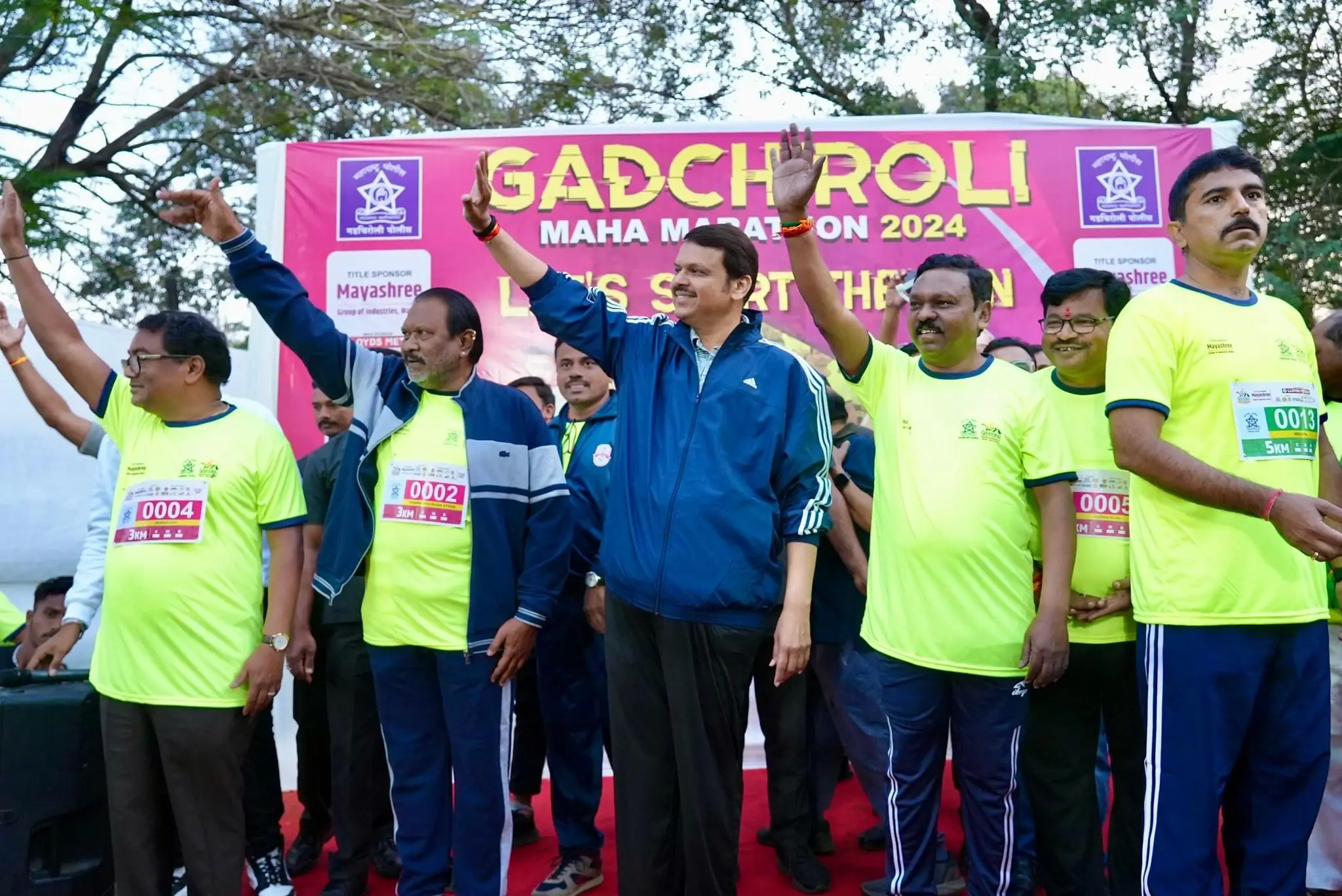
गडचिरोली… नाव ऐकताच डोक्यात पहिला विचार काय येतो? आदिवासी? नैसर्गिक सौंदर्य आणि खनिज संपदेने नटलेला…
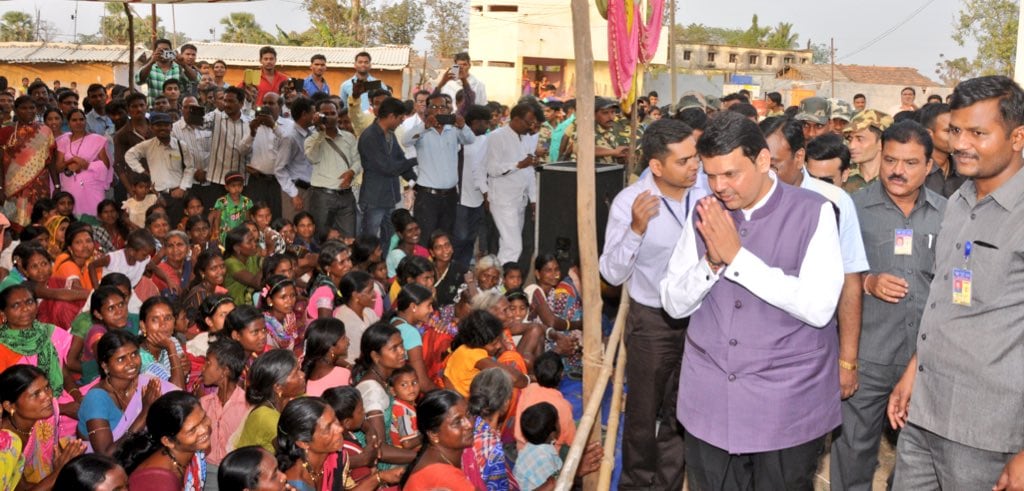
नक्षली विचाराने भारावलेल्या नक्षलवाद्यांना समाजात पुन्हा एकदा योग्य आणि सन्मानाने जीवन जगण्याची संधी देऊन त्यांना…