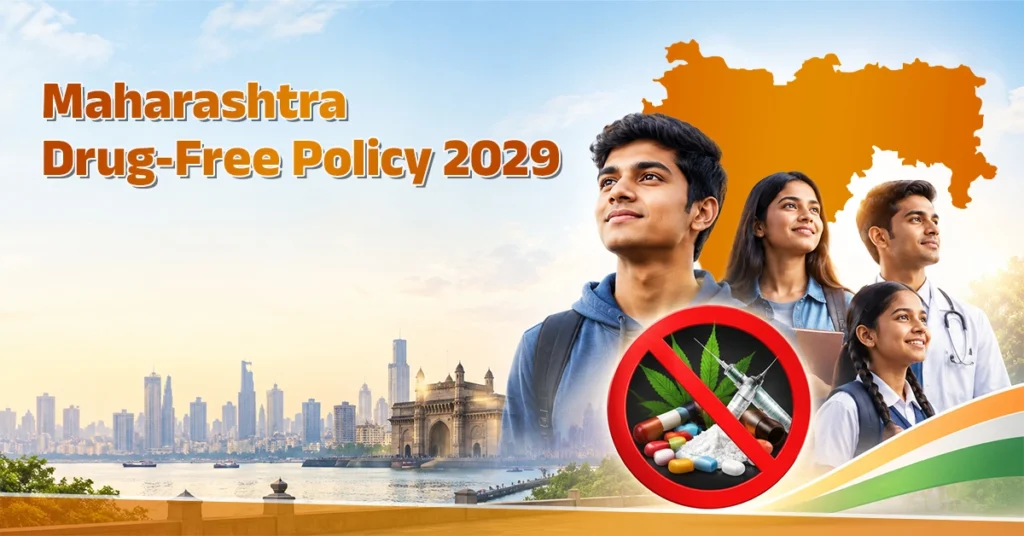
Drugs and narcotics pose continuous threats to society and demand a 360 degree strategy by the government to keep them at bay. The Devendra Fadnavis government has adopted a Whole-of-Government Approach to rid the state of this social peril by introducing the Maharashtra Drug-Free Policy 2029, in association with the central government’s Drug-Free India Campaign. The policy targets both natural and synthetic narcotics and, to that end, has set aims for a complete ban on import or local production of synthetic substances in the state; an annual award has been announced for the districts free from synthetic substances.
Accountability at every stage of administration
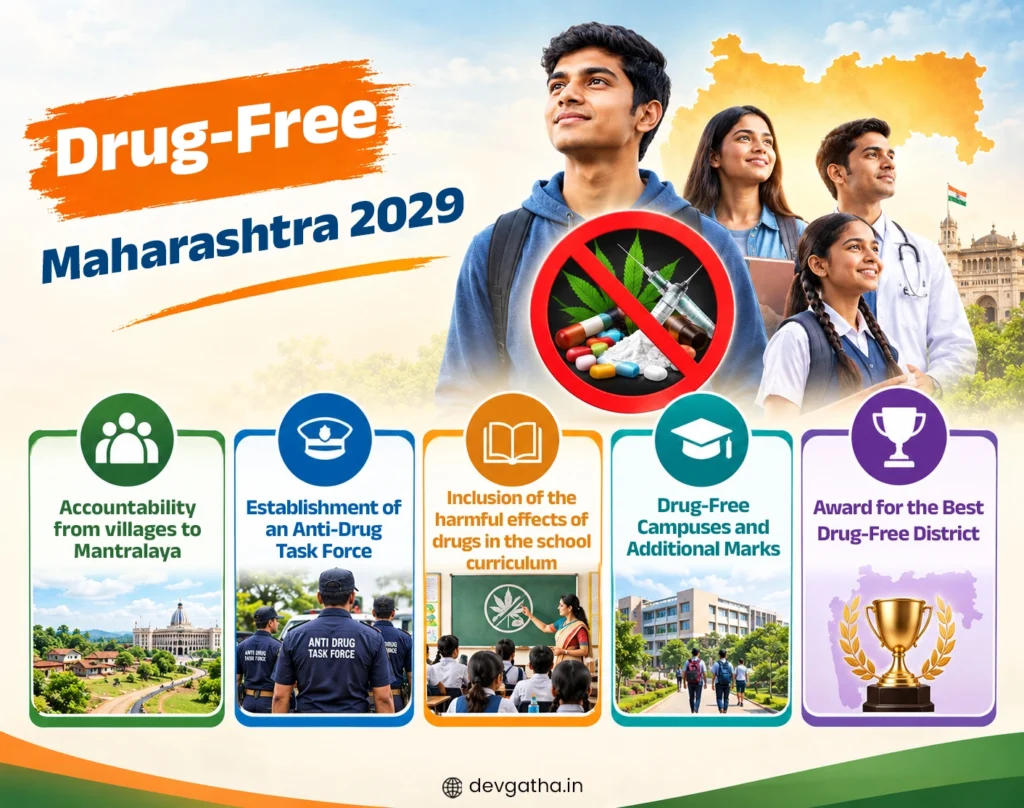
The introduction of the “Maharashtra Drug-Free Policy 2029,” which took place on September 1, 2026, manifests the Fadnavis government’s war against drugs as being a Whole-of-Government Approach. In this way, Maharashtra became the first state in the country to formulate and implement a comprehensive and all-inclusive government policy. The policy has an underlined target of ensuring a drug-free Maharashtra by 2029 to save and secure the youth from the perils of drugs and narcotics. The policy incorporates tougher legal actions against the peddling and production of targeted items, as well as efforts to raise widespread public awareness in society. The policy model ensures not just the policing activities but also seamless coordination across all governance tiers, extending through village panchayats, districts, departments, and ministerial levels.
Task force cum curriculum to create awareness among people
The policy has been designed as a comprehensive, end-to-end framework to target every link in the narcotics supply and consumption chain starting from the cultivation of narcotics, production of natural and synthetic drugs, their transportation, sale and consumption, through structured inter-departmental actions. For a strict and precise implementation of the policy, an ‘Anti-Narcotic Task Force’ has been formed. All concerned departments have to work in coordination with the task force. Under the heavy surveillance by the police, efforts are on to keep the new generation away from addiction. Towards this mission, the school curriculum from Class 5 onwards will have
at least one lesson on drug awareness and de-addiction, starting in the 2027–28 academic year.
bring about changes in the education sector itself. To this end, at least one section in the school curriculum from the coming academic year (2027) onwards to create public awareness about the ill-effects of harmful substances. Also, During the Phase 3 of the Mukhyamantri Majhi Shala, Sundar Shala campaign, the schools will be encouraged to conduct drug-awareness among students by giving additional points for implementing anti-drug initiatives. Special funds will be provided for keeping the premises of all educational institutions in the state ‘drug free campuses’.
Best Drug-Free District Award
The policy introduces a highly structured accountability and incentive plan for local self-governance institutions to ensure awareness and cooperation from the grass-root level, often referred to as Dhoranachi Talagala. Additional merit points will be given to the villages for drug-free campaign activities under the ‘Chief Minister Samriddh Panchayat Raj Abhiyan’ and ‘Majan Gaon Arogya Sampann Gaon’ campaigns. Also, every year on 26th June, on the occasion of International Anti Drug Abuse and Illicit Trafficking Day, the best performing district will be honored with the “Best Drug-Free District” award; the concerned districts will be inspected for the award between 2nd October to 30th April. Thus, by putting up administrative measures, strict laws, educational awareness and participation of local institutions, the Devendra Fadnavis government has taken determined steps towards making Maharashtra free from drug abuse.
Related articles: