
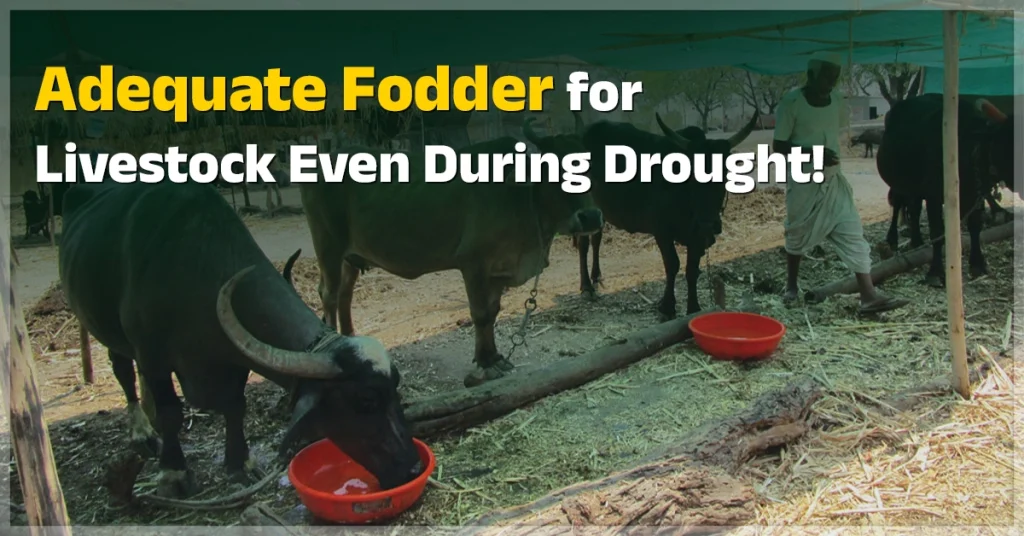
Dairy farming and animal husbandry have long been vital components of Maharashtra’s rural economy. However, factors such as erratic rainfall, climate change, and the impact of El Niño have led to recurring drought-like conditions, creating a major concern for livestock farmers. In recognition of this, the Devendra Fadnavis government has approved the ‘Maharashtra Fodder Development Policy 2026‘ to tackle the severe fodder shortages caused by drought and to ensure the well-being of livestock. Through this policy, the state aims a superior drought fodder management in Maharashtra to ensure not only the sufficient amount of fodder required for approximately 278.36 lakh domestic and agricultural cattle in the state, but also its quality and nutrition level, so that the livestock assets of the farmers remain unharmed during droughts.
Impact on Animal Health and Reproductive Capacity
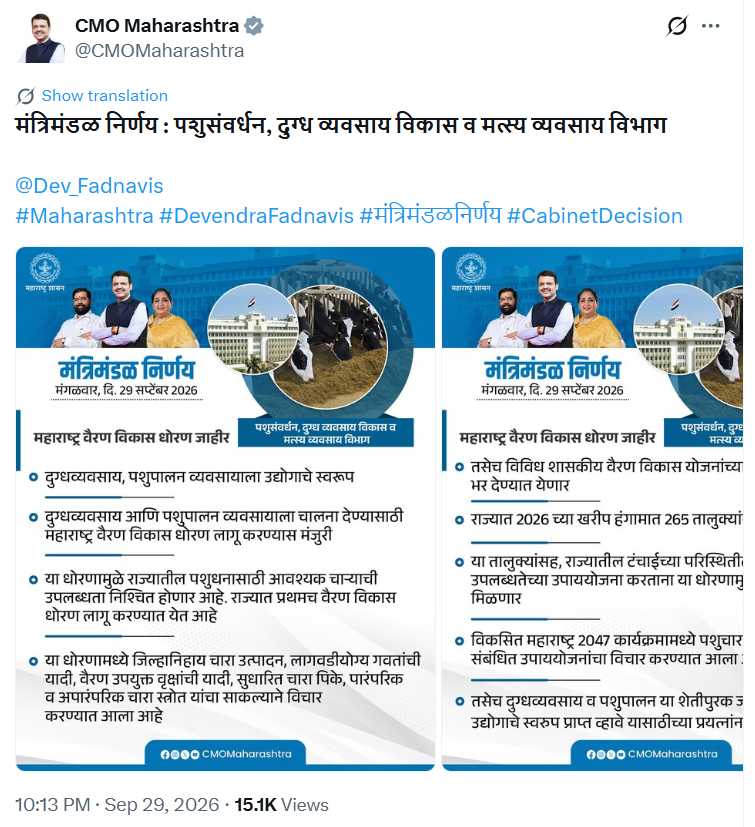
Even during years of normal rainfall, Maharashtra faces an annual deficit of 22.79% in green fodder and 21.43% in dry fodder. This shortage is becoming increasingly critical due to rapid urbanization, the shrinking of traditional grazing lands, and the fact that fodder crops are cultivated on only 3.01% of the land. Fodder accounts for approximately 60% to 70% of the total cost of rearing livestock. When fodder becomes expensive or scarce during droughts or the peak summer season, the financial viability of dairy farming is severely disrupted. Fodder shortages can reduce milk production by up to 50% and have a detrimental effect on the health, weight, and reproductive capacity of the animals. To address these challenges, a shift from traditional methods to a modern, scientific approach was essential. This has led to the approval for a fodder development Policy for the first time in Maharashtra by the state government during its recent cabinet meeting on September 29, 2026.
Fodder Cultivation Area to Expand by Additional 331.42 Thousand Hectares
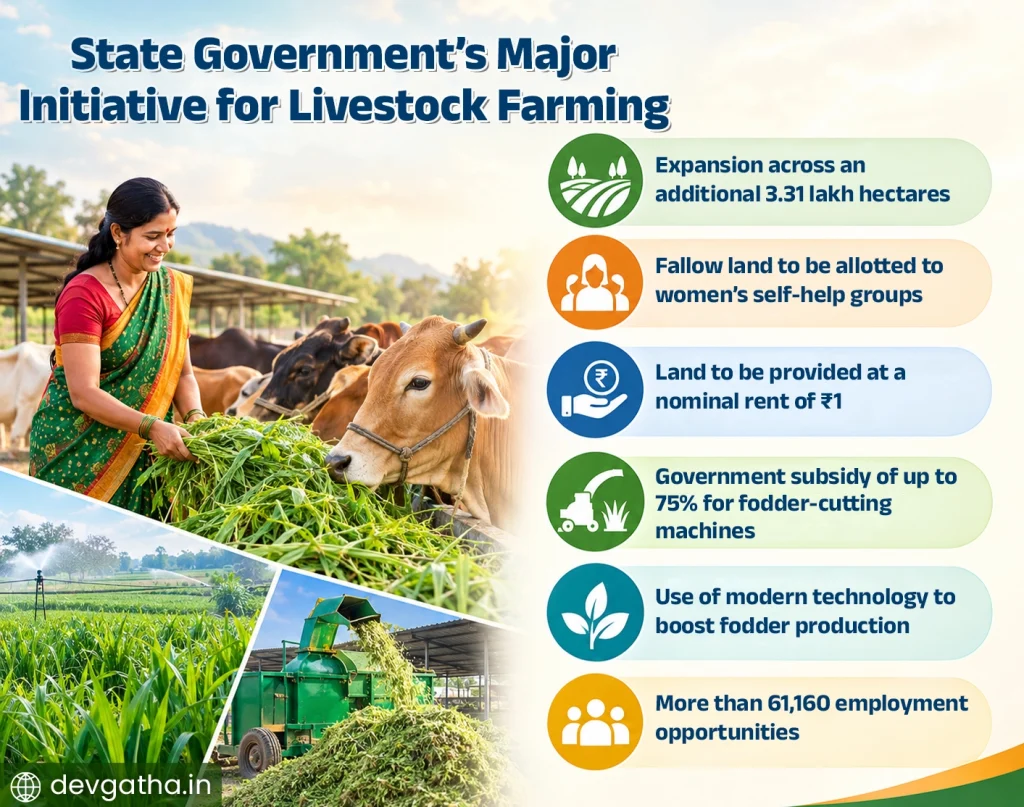
Under the newly approved fodder development policy, Maharashtra, various fodder cultivation subsidies have been announced and a target has been set to increase the land area for fodder cultivation up to 5 percent (an additional 331.42 thousand hectares) over the next five years. To achieve this, land belonging to the Forest Department, as well as wasteland and fallow land under the Revenue Department, will be utilized. These lands will be leased to women’s self-help groups for fodder cultivation at a nominal rent of ₹1. Additionally, to ensure efficient water use and the availability of green fodder throughout the year in drought-prone areas, ‘horti-pasture’ practices, specifically combining pasture grass or legume cultivation with orchards—will be promoted. Special emphasis will be placed on cultivating Azolla, using hydroponics, and growing spineless cactus. Furthermore, technologies such as silage making and hay-bale production will be employed to preserve the surplus green fodder available during the monsoon for use during the summer shortage. There will also be a focus on urea treatment for paddy straw, ozone treatment for cotton stalks, and enzyme treatment to improve the quality of sorghum (jowar).
Over 60,000 Employment Opportunities
This policy will directly benefit small and landless farmers, dairy farmers, goat and sheep rearers, and women’s self-help groups in the state’s rural areas. To curb fodder wastage by up to 30 percent, equipment such as sorghum processing machines, mini TMR units, and hydroponic setups are being provided at subsidies ranging from 50 to 75 percent under the ‘Mukhyamantri Gramin Pashudhan Udyamita Vikas Yojana’ (Chief Minister’s Rural Livestock Entrepreneurship Development Scheme). Additionally, ‘fodder customer service centers’ (Vairan Grahak Seva Kendra) are being established to provide modern machinery on a rental basis. This policy will offer a sustainable safety net for livestock owners during droughts and help maintain animal health and milk production. Now that animal husbandry has been accorded the same status as agriculture, this new policy will help to create more than 61,160 employment opportunities over the next five-year period and help the rural economy to be self-reliant and prosperous.
Related articles:
- Maharashtra declares drought in 265 talukas; Multiple relief schemes and the complete list of the drought-affected talukas in Maharashtra
- Drought Declaration Criteria in Maharashtra. When and how can the government officially declare a drought?
- Promoting Indigenous Cattle Breeds to Encourage Organic Farming and Generate Financial Backup for the Farmers in Maharashtra