
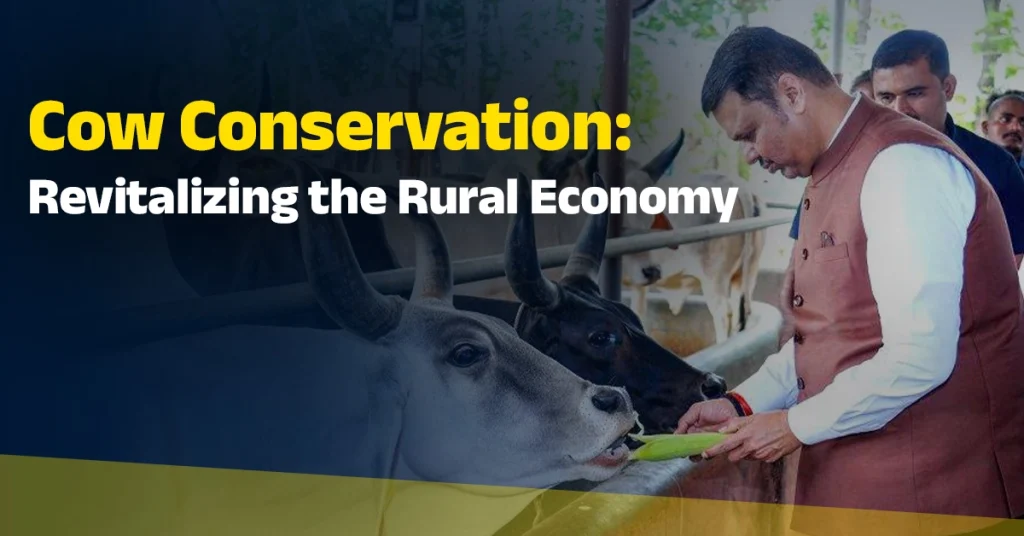
Despite modernization, rural Indian economies still heavily rely on cattle for plowing fields, transportation, and organic fertilizer. Apart from that, milk and bio-fuel are the additional benefits enjoyed by the farmer families that own cows. So, cattle function as a multi-purpose asset and a financial safety net for village households. That explains why cows are revered and often called ‘Gau-Mata’ in the villages and why the Maharashtra government is putting emphasis on cow protection and building a resilient cow-based rural economy for farmers’ prosperity. A scheme called the ‘Rajyamata Gomata Samvad Yatra’ has been launched by the government to promote the conservation of indigenous cattle, encourage natural farming, and establish cow shelters (goshalas) across Maharashtra.
An Effort to Promote Cattle Conservation For Sustainable Rural Economy
The ‘Rajyamata Gomata Samvad Yatra 2026,’ a statewide awareness program, which began on June 22, concluded in Nagpur. Following the decision to grant the status of ‘Rajyamata-Gomata’ (State Mother-Mother Cow) to indigenous cow breeds in Maharashtra, this program was organized to spread awareness and promote conservation of these breeds to increase farmers’ incomes and strengthen rural economies. The yatra, jointly organized by the Maharashtra Cow Service Commission and the Department of Animal Husbandry, covered 6000 kilometers in 15 days across more than 30 districts. Its objective was clear and deeply rooted in rural areas. While some critics attempted to cast the yatra as an attempt to evoke merely religious and cultural sentiments, the initiative was actually aimed at informing villagers about economic benefits from conserving indigenous cow breeds, advantages of organic farming, and more.
Conserving Cows is Essential for Toxin-Free Food Production
Awareness is being re-established among the public through the ‘Gau Sanchar Yatra’ (Cow Awareness Campaign). India’s indigenous cow breeds have always been integral to farmer families for several reasons. And that is even more relevant today in the context of increasing threats to the agri sector. The excessive use of chemical fertilizers and pesticides in modern agriculture is depleting soil fertility and reducing crop yields. Meanwhile, farmers face a dual crisis: the prices of agricultural inputs are determined by global markets, yet the cost of production keeps rising. In this context, cow conservation has become the need of the hour—not only to ensure toxin-free food production and safeguard human health but also to help farmers overcome this crisis.
Focus on Establishing ‘Gau-Shakti Kendras’ and Research Centers
The state government has started a mission educating farmers about how conserving and protecting indigenous cow breeds goes far beyond traditional cattle rearing, and can lead to economic prosperity for farmers. Unlike foreign dairy cows, native cow breeds are easier and more economical to rear and maintain, and can serve as the cornerstone of a farmer’s economic stability; a farmer who owns indigenous cattle can still have this liquid asset even when their farm crop yields are abysmal. Native breeds like Gir, Rathi, Tharparkar, Red Sindhi, Deoni, etc. are known for their high quality and large amount of milk and thereby generate significant economic value.
However, promoting and strengthening native cow breeds requires scientific study and methods, which is why the Maharashtra government is stressing on developing cow shelters (goshalas) to cow power centers. CM Devendra Fadnavis emphasized that state ‘gaushalas’ (cow shelters) should not merely function as animal shelters or breeding centers; they should be developed into ‘Gau-Shakti Kendras’ (Cow-Power Centers) and research hubs. Also, these centers should be equipped to produce cow-based medicines and organic fertilizers while facilitating new research. This transformation will have a significant role in generating an additional financial backup for farmers, which will support them in the events of crop failures, market fluctuations, etc. Besides, cow urine and dung play a crucial role in toxin-free, organic, and natural farming, significantly reducing agricultural input costs.
Launch of the ‘Go 10’ Brand – Natural and Quality Products
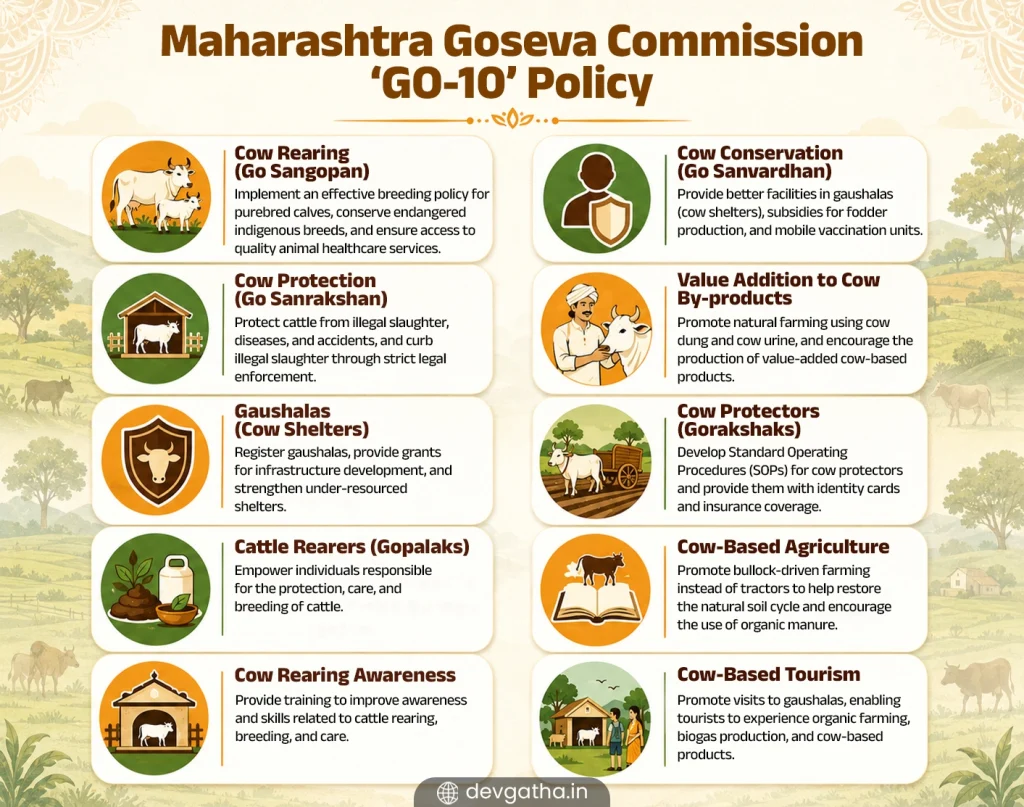
To make the entire process professional and systematic, Chief Minister Devendra Fadnavis launched ‘Go 10,’ a special brand for the Maharashtra Cow Seva Commission at the closing ceremony in Nagpur. This brand will vouch for high quality indigenous cow breeds produced at the Gaushalas, to be procured by farmers. The cow sheds under this initiative will be used not just for milk production but also for the production of eco-friendly natural colours, various cow-based medicines, organic fertilizers and other products made from cow dung. All these products will be marketed under one roof and under the brand name ‘Go10.’ The government will provide subsidies to cow shelter operators for the production and promotion of these products. Necessary funds are being provided by the government so that Maharashtra Goseva Aayog can work at its full capacity. Considering breeding of indigenous cows as the foundation of organic agriculture, its conservation and brands like ‘Go 10’ will open a new avenue of prosperity for farmers in Maharashtra.
Related articles: