
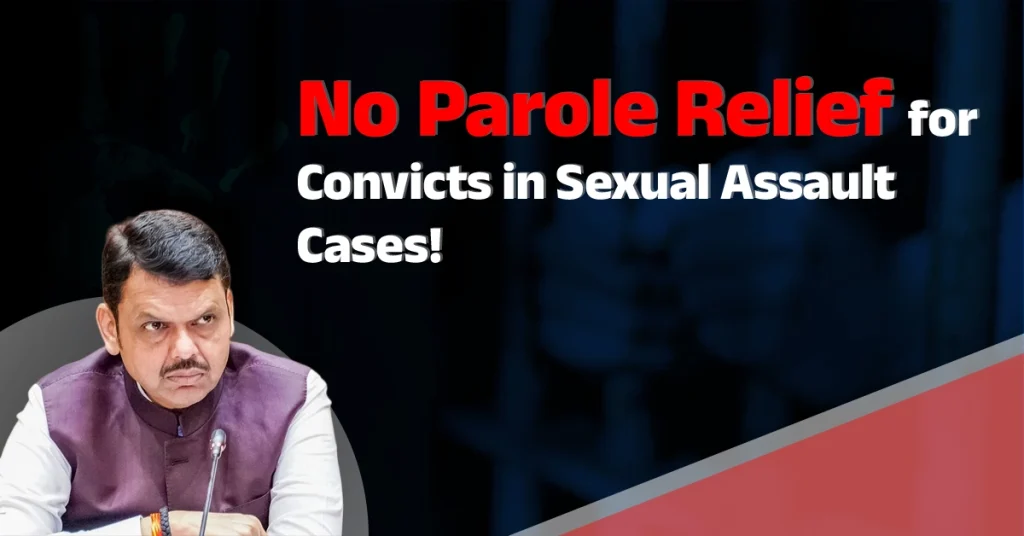
Even as we, as a society, scale new heights of progress, certain incidents occur that leave us completely numb. The atrocity committed against a 4-year-old girl in Nasrapur, Pune, culminating in her brutal murder, has shaken not only Maharashtra but the entire nation. This act, perpetrated by a 65-year-old man, is not merely a shock to a single family; it casts a grave question mark upon the very notion of a progressive society. This is even more concerning when it comes to light that such perpetrators have often been found to be habitual offenders who, by exploiting legal provisions such as parole, returned to commit the very same acts. Therefore, it becomes imperative to re-evaluate both the stringency of the law and its inherent loopholes. The trajectory spanning from the 2016 Wadala incident to the current Nasrapur Pune murder case case underscores the carelessness of offenders and highlights the urgent need to curb the legal loopholes that embolden them. Against this backdrop, Chief Minister and Home Minister Devendra Fadnavis has announced zero tolerance policy against such heinous crimes and decided to amend law to deny parole and furlough for offenders convicted of sexual assault.
Widespread Outrage Across the State and Within the Cabinet
The brutal rape and murder of a four-year-old girl by a 65-year-old man in Nasrapur, Pune, has evoked strong reactions from all sections of people in the state. Anger regarding this incident was also expressed during the Cabinet meeting. Chief Minister Devendra Fadnavis has directed the police to gather all evidence against the accused to ensure his conviction and strictest punishment. It is noteworthy that the accused in this case had committed similar acts in the past and served his sentence before getting released. But his sentence did not deter him from committing the same beastly crime on another child. This proves the potential danger of showing any leniency or humanity towards criminals who, after their release or during parole can commit the same heinous acts again. During the State Cabinet meeting on May 5, the Chief Minister took a significant decision to make sure that there will be no parole for rape convicts in Maharashtra. To implement this, the Law and Judiciary Department has been directed to amend the Maharashtra Prison Rules.
What is parole?
Parole is a temporary release of a prisoner, serving long term, to spend a few days with their families. Parole is not a way to reduce or pardon a sentence; the offender, while outside the prison, will be under the supervision of a parole officer. This important rule has been made to improve the condition of prisoners and protect their human rights in the Indian justice system. A prisoner can apply to the court for parole in the events like illness of a family member, marriage or legal matters, and the like. Once this application is approved, the prisoner is released from jail for a fixed period of time with certain conditions. This is called parole. During this time, the prisoner has to adhere to some rules.
Return of the No Parole Policy for Prisoners of Serious Crime
In fact, according to crime statistics, 80 to 90 percent of criminals in sexual exploitation cases have a history of committing similar crimes and getting arrested. A shocking truth has come to light. In 2016, the accused who raped a girl in Wadala had fled while on parole, which posed a big challenge to the system. In this backdrop, in 2016, the government led by then Chief Minister Devendra Fadnavis made a historic amendment to the Maharashtra Prison Rules (Mumbai Furlough and Parole Amendment Rule, 2016), to deny parole to prisoners serving life imprisonment for serious crimes like rape, terrorist activities, treason against the state, kidnapping for ransom and drug trafficking. However, citing the right to equality under Article 14 of the Indian Constitution, the court said that refusing to grant parole only on the basis of the type of crime is discriminatory and abolished that amendment.
But, the heart-wrenching incident of Nasarpur in 2026 and the repeated behavior of criminals has once again brought to the fore the need for changes in the old law. Besides improving the human rights of criminals, it is the duty of the government to save the lives of innocents in society. Therefore, in the cabinet meeting held on May 5, Chief Minister Devendra Fadnavis has directed the Law and Justice Department to make more stringent changes in this law. The criminals must have fear of law and the perpetrators of such ghastly crimes should not get a chance to come back into society and commit something similar. This time the government is now ready to defend its decision. The state government is further plugging loopholes and strengthening the state law so that such criminals get the harshest punishment without any exemption and under any circumstances.
Related articles: