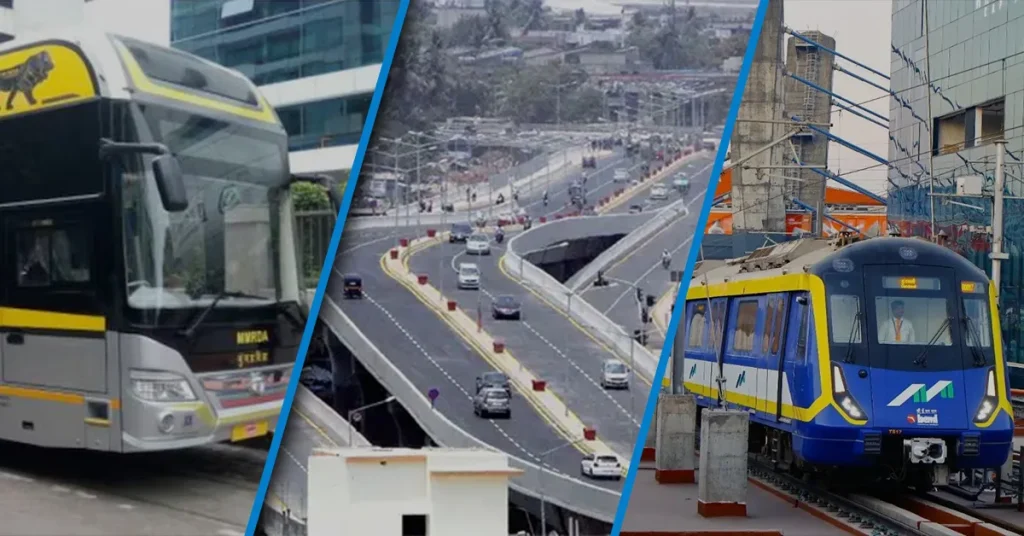
‘Infra Man’ Devendra Fadnavis spearheaded a significant initiative to enhance connectivity and transportation in the Greater Mumbai region through the Mumbai Metropolitan Region Development Authority (MMRDA). Under his continued push, the agency has undertaken several projects to bring about a major transformation in Mumbai’s transport system. The passionate Chief Minister personally oversees the implementation of these infra projects, actively organizing private investment, international collaboration, and cutting-edge technology to ensure their timely completion.
Driven by CM Fadnavis’s decisive leadership and backed by the center’s vision of a developed India, the state government has created a roadmap to develop a $1.5 trillion economy for the MMR by 2047. As a step to realize this wide economic goal, the state government has approved 19 critical MMRDA infrastructure projects worth over ₹12,000 crore. The projects are divided into four key categories:
- Mass Transit & Public Transport Expansion
- Modernization & New megaprojects of infrastructure
- Sustainability & Green Transport
- Multimodal Integration of Surface, Port & Air
Plans are in place to convert 90 percent of the public surface transport into electric vehicles to curb emission and pollution. Additionally, strategies are being formulated to source 70 percent of the energy required for various operations through recycling.
Some of the major transport & Infra initiatives in the city
Mumbai Metro – Transforming the Intracity Commuting
The metro network is completely changing the daily commuting experience in the MMR. The current Metro network in the MMR is targeted to be 337 kilometers long across the region, of which five Mumbai Metro lines, i.e., Metro 1, 2, 3, 7, and 8 are already fully operational. Trials are underway for Metro lines 2B and 9. Expansion of the metro network is helping to reduce traffic congestion in the city, cut down travel times, and curb pollution. Mumbai’s first underground metro, Mumbai Metro 3 (Aqua Line), which was launched recently, has received an overwhelming response from commuters. For the 2025-26 financial year, the MMRDA was allocated approximately ₹10,970 crore towards new metro projects in Mumbai; this will accelerate the expansion of the network in other parts of the region and associated infrastructure projects.
The Mumbai Coastal Road Project – Enhancing Traffic Ease and Beauty of the city
Following the inauguration of the final phase, the entire Coastal Road was opened to citizens effective August 15, 2025. The approximately 53 km long road stretching from south Mumbai to Dahisar currently, and then to Bhayandar later, with its surrounding areas beautified, has not only made commuting faster and easier for Mumbaikars but has also greatly enhanced the city’s aesthetic appeal. The road is also facilitated with modern amenities like cycle tracks, pedestrian underpasses, parking, bus bays, toilets, etc. Thanks to the persistent efforts of the MMRDA, infrastructure projects meeting global standards are being implemented in Mumbai. Of the six planned exit points in BKC, five have been completed, with the final one scheduled for completion by December. Projects involving new link bridges, tunnels, flyovers, and a 215-meter-long cable-stayed bridge have provided alternative routes connecting various parts of the city. This is enabling a signal-free commute for Mumbaikars and significantly easing the traffic burden on the city’s congested roads.
Mumbai One App – Making Commuting Seamless
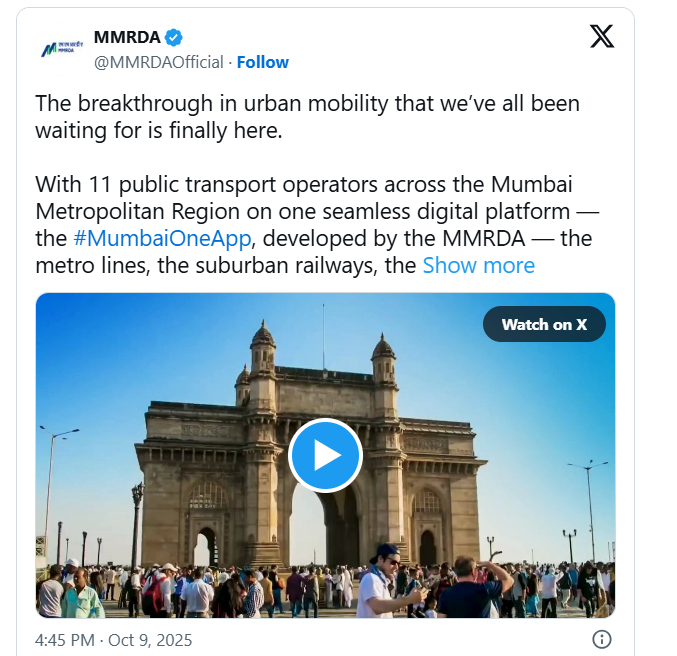
Now commuting across MMR using a multi-modal transport system has become even more convenient for millions of commuters. MMRDA has launched the ‘Mumbai One App,’ India’s first unified mobility app, which integrates 11 major transport systems across the MMR – the Mumbai Metro, suburban railways, monorail, and bus services in Mumbai, Thane, Kalyan, Navi Mumbai, and Mira-Bhayandar, into a single digital platform. This saves commuters valuable time during the busy hours by eliminating the need to navigate multiple apps, manage various tickets, and standing in long queues. With this app, commuters can buy tickets for the metro, local trains, buses, and the monorail in one place, while also receiving guidance on the fastest, nearest, and most convenient routes. There is also an option for using multiple transports with a single ticket.
BKC Pod Taxi Project – The next step in transport services.
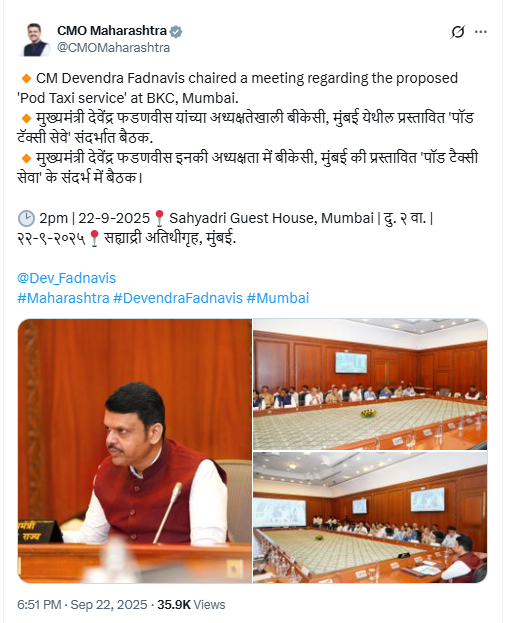
The commercially significant BKC (Bandra-Kurla Complex), situated between the Kurla and Bandra stations, houses the corporate offices of numerous major companies and banks, as well as the consulates of various nations. Additionally, the Bombay High Court and a bullet train station are proposed in this area. Consequently, traffic in the region is increasing day by day, placing immense pressure on existing transport facilities. Mumbai residents often face delays commuting to BKC, despite its proximity to Kurla and Bandra. To address this problem, the government has decided to launch a pod taxi service between Kurla and Bandra. This will be India’s first driverless AI powered pod taxi network covering 8.80 km with 38 stations. Each pod taxi will accommodate six passengers and operate at a speed of 40 km/h. The project will be implemented through a Public-Private Partnership (PPP) model to expedite the launch of the service. Recognizing BKC’s commercial importance, the state government is emphasizing that the pod taxi services must be world-class. Chief Minister Devendra Fadnavis reviewed the proposed pod taxi project in September and issued directives to implement the project as soon as possible.
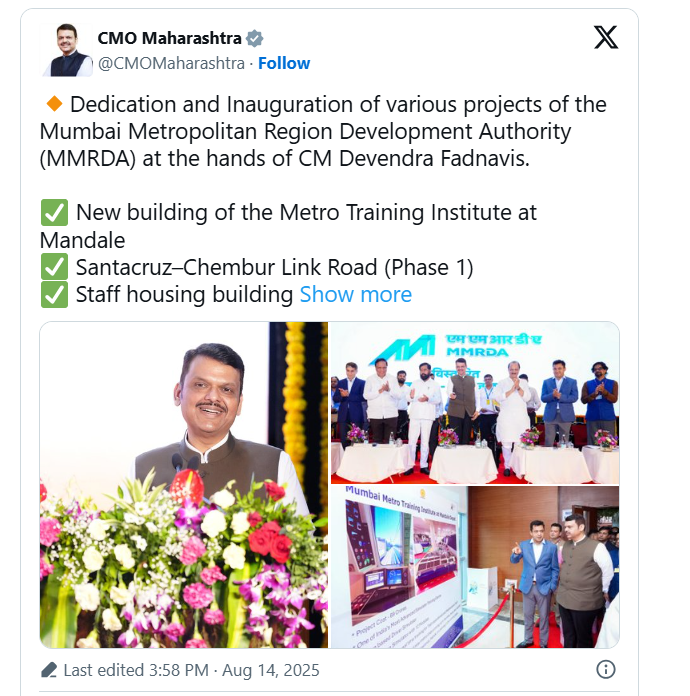
With the Devendra Fadnavis government’s decisive efforts, Mumbai is on the path to realize Prime Minister Narendra Modi’s vision of ‘Mumbai in 59 Minutes.’ The city is entering a new era through several projects like the launch of new metro lines, pod taxis, mono rail, water taxis, improvements in suburban train services, and more. Furthermore, projects such as the Metro Training Institute at Mankhurd-Mandale and staff housing at Malvani are expected to significantly enhance metro efficiency and service quality.