
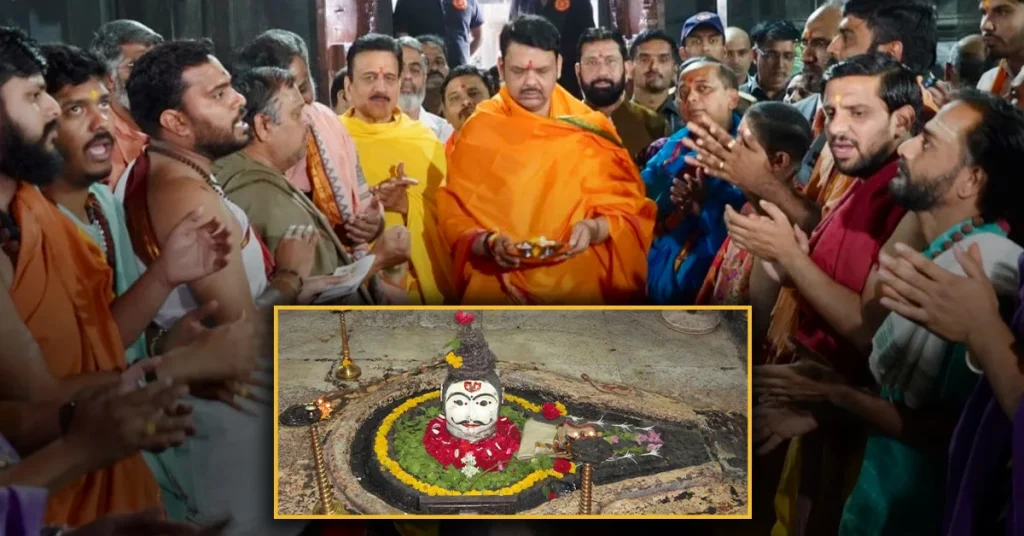
Pilgrimage sites carry an aura of religion, mythology, culture, and tradition mixed together, where thousands of devotees flock every day from distant places to offer their pujas. However, pilgrimage also generates brisk commerce in the respective places to boost the livelihood of the people and local economies. Maharashtra is blessed with some major pilgrimage sites, including 5 of the 12 Jyotirlingas in India. So, when the Devendra Fadnavis government takes initiatives for the development of the jyotirlingas and other major religious sites in the state, the idea doesn’t remain limited to serving religious faith only but also entails strengthening of local economies, state’s cultural traditions, and social harmony. The 5 Jyotirlingas in Maharashtra include Shri Kshetra Bhimashankar in Pune district, Trimbakeshwar in Nashik, Aundha Nagnath in Hingoli district, Vaijnath in Beed-Parli, and Grishneshwar in Chhatrapati Sambhajinagar (Aurangabad). These pilgrimage sites are no longer just places of worship for people but serve as centers for spiritual practices, rituals, and philosophical wisdom of Hinduism. Now CM Fadnavis wants to take the Jyotirlinga-pilgrimage experience to a different level through large-scale renovation and development of the ancient temples and sites and modernization of facilities in his broader plan of creating a religious tourism circuit in the state linking the Jyotirlinga sites. This decision also reflects his commitment to propagating Hindutva through development and preservation of Hindu religious, cultural, and heritage sites. This ambitious project has been given top priority by the state government with sanctions of special funds and appointment of senior IAS officers by the CM for monitoring and overseeing the fast-tracking of the comprehensive and futuristic Jyotirlinga development plan.
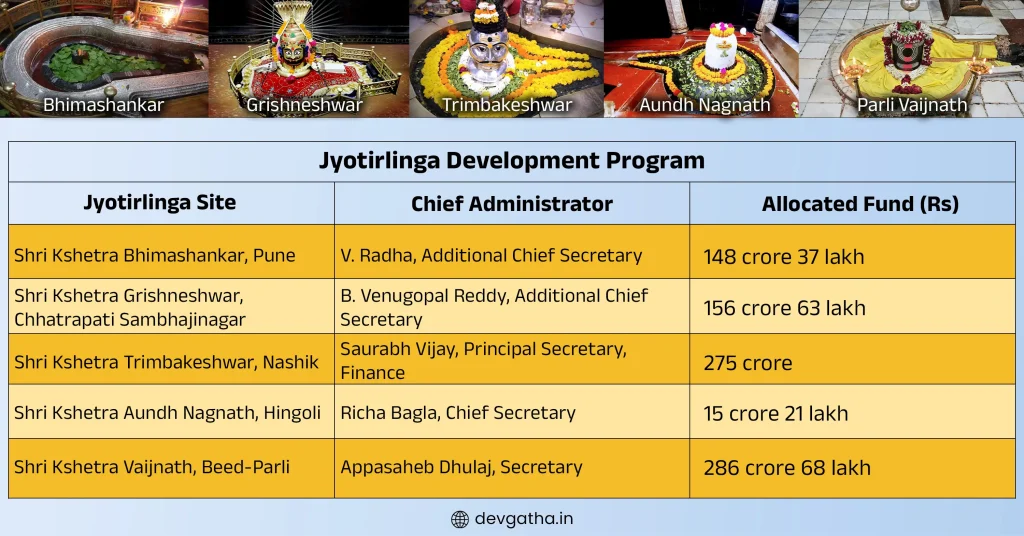
To give Maharashtra’s religious tourism a boost to foster investment and growth of the local economies, Chief Minister Devendra Fadnavis has launched a special initiative for the development of pilgrimage sites. The development plan he has presented for the 5 Jyotirlingas in Maharashtra will be aimed at renovating the temples and infrastructure, improving the civic facilities, increasing the convenience of the devotees, and preserving the cultural and spiritual heritage of these places, which will promote religious tourism from across the country and even outside. Another reason he has taken decisive steps for the implementation of these projects is his commitment to strengthening Hindutva. Devendra Fadnavis believes that temples are integrated parts of Hinduism and Hindutva; well maintained pilgrimage sites with smooth management will encourage more religious tourism, which will in turn help in spreading and strengthening traditional Hindu culture, values, and a shared identity that form the core of Hindutva. He has not only sanctioned funds for the development of these pilgrimage sites but has also appointed senior administrative officers as nodal persons to ensure proper and timely execution of the individual projects. B. Venugopal Reddy, Additional Chief Secretary, Higher and Technical Education Department, Chhatrapati Sambhaji Nagar, is responsible for Shri Kshetra Trimbakeshwar, Nashik district; Saurabh Vijay, Principal Secretary, Finance Department, is responsible for Shri Kshetra Aundha Nagnath, Hingoli district; and Appasaheb Dhulaj, Secretary, Other Backward Classes Welfare Department, is responsible for Shri Kshetra Parli Vaijnath, Beed district.
As for the amount of money sanctioned for the individual Jyotirlinga is concerned, here is a quick update:
Rs 148.37 crore towards 11 works under the Shri Kshetra Bhimashankar pilgrimage development plan, Rs. 156.63 crore towards the Shri Kshetra Grishneshwar pilgrimage development plan, Rs. 275 crore towards the Shri Kshetra Trimbakeshwar development plan ( this site has also been granted ‘A’ category tourism destination status). Rs 15.21 crore towards the Shri Kshetra Aundha Nagnath pilgrimage development plan, and Rs. 286.68 crore towards 92 works under the Shri Kshetra Parli Vaijnath pilgrimage site development plan. He has instructed that these works be expedited in view of the upcoming Kumbh Mela.
The Jyotirlinga Development Plan includes provisions for facilities such as ropeways, eco-tourism, hotels, forest trails, helipads, police posts, and power substations in the respective towns. This will enhance the experience for the pilgrims as well as tourists. The state government is striving to maintain a balance between religious, cultural, social, and environmental aspects through these efforts.
The government provides funds from the District Annual Plan for the development of A, B, and C category pilgrimage sites, tourist destinations, and monuments in the state. However, many times, the development of such pilgrimage sites is not completed within the stipulated time due to insufficient funds. To address this, in June 2015, Devendra Fadnavis, with cabinet approval, had formed state-level summit committees, high-powered committees, and district-level committees to formulate development plans for pilgrimage and tourist sites in the state, and accordingly, approved the development suggestions made by the committees Following this structure, the then Devendra Fadnavis government approved development plans for pilgrimage sites in various districts. Similarly, Chief Minister Devendra Fadnavis has now prioritized the development plan for Jyotirlinga pilgrimage sites in the state. His approach demonstrates the robustness and reliability of his planning.
Maharashtra is a land of numerous religious sites, including the five Jyotirlingas or the abodes of Lord Shiva. Most of these Jyotirlingas in Maharashtra are located in rural areas with challenging infrastructure, which prevents them from developing into major pilgrimage centers. Chief Minister Devendra Fadnavis has launched a grand initiative to develop a religious tourism circuit out of the five Jyotirlingas and a few other holy shrines. This involves renovating and preserving the ancient temples and developing each of these Jyotirlinga sites with modern amenities and facilities so that devotees in large numbers can come to bask in the religious and spiritual heritages of these temple towns. A focus on boosting religious tourism in Maharashtra is both an intelligent move to revitalize the local economies and a bold move to strengthen Hindutva.
Related articles: