
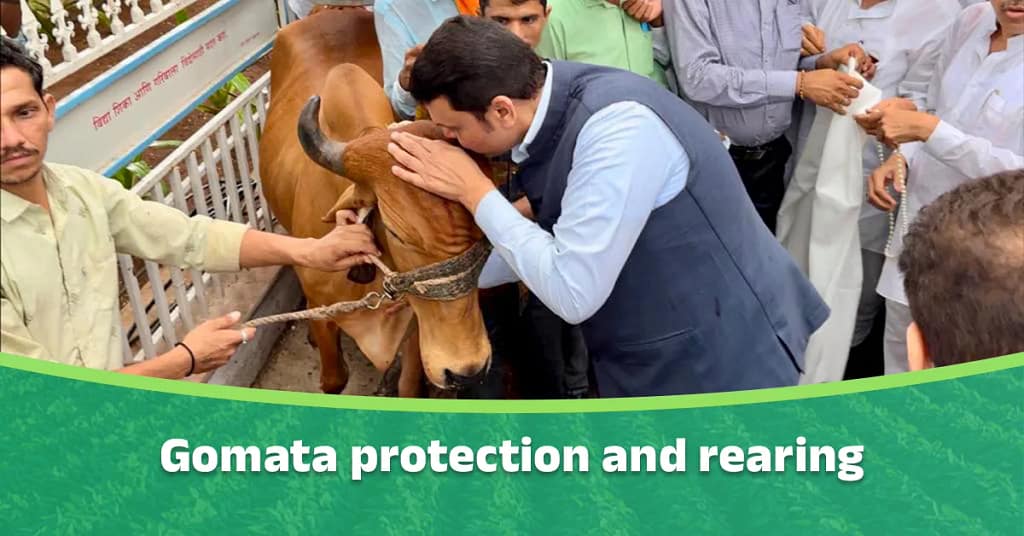
Cows and cattle are considered holy and a cultural identity in India, which is rooted in its agrarian civilization. Given the rural economy in Maharashtra is largely agriculture-based, cows make an integral part of rural life. Even though the use of cattle in agriculture is rapidly reducing due to increased application of tractors and other specialized equipment, cow rearing is still a source of sustainable income for farmer households with their milk, manure (for biogas and organic fertilizer), urine (for use in pesticides), etc. However, the number of indigenous cows is on the decline due to various factors like the spread of industrialization, urbanization, and modern farming systems; cow slaughtering; and smuggling of Indian cows.
In this scenario, the Devendra Fadnavis government took an important decision to protect and preserve Indian indigenous cattle by implementing a handful of measures. The government banned the slaughter of cows, bulls, and bullocks in Maharashtra, provided state government subsidies to cattle shelters, promoted cow urine and dung products, and granted indigenous cows the status of “Rajyamata-Gomata.” It was also decided to observe July 22nd every year as the “Pure Indigenous Cattle Breed Conservation and Promotion Day.” These decisions were made to raise awareness about the importance of indigenous cow breeds, encourage their conservation, and promote the use of their products (milk, urine, and dung) for organic farming and health benefits. The initiative is also aimed at research on improving the fertility and milk production of indigenous cows.
The Devendra Fadnavis-led government has adopted a comprehensive approach when making decisions regarding the conservation of indigenous cows and the protection of bovine livestock, carefully studying how indigenous cows could be utilized scientifically and commercially. In 2015, during the first term of government, Chief Minister Devendra Fadnavis amended the Maharashtra Animal Preservation Act and banned the slaughter of cattle—cows, bulls, and bullocks. This, besides increasing the cattle population in the state, placed the responsibility for their maintenance on the state. So, the government launched the Govardhan Govansh Seva Kendra scheme to provide financial aid to registered goshalas (cow shelters) for managing non-productive indigenous cows and to promote self-employment in managing surplus cattle against daily maintenance subsidies to support these shelters and the welfare of the cattle.
Revisions to the Maharashtra Animal Preservation Act
The earlier law on the cow slaughter ban in Maharashtra under the Maharashtra Animal Preservation Act of 1976 was limited to banning only the slaughter of cows. As there was no mention of bulls in the said law, slaughtering bulls would not be seen as a punishable offence. However, in 1995, the Shiv Sena-BJP coalition government passed the Maharashtra Animal Preservation (Amendment) Bill, which included banning the slaughter of bulls as well. The 1995 law also banned selling or storing beef for sale in the state, with a 5-year jail term and a fine of ₹10,000. In 2014, the Devendra Fadnavis-led BJP-Shiv Sena coalition government came to power. On March 4, 2015, the Maharashtra Animal Preservation Act was amended again. The revised law banned the slaughter of all bovine animals in the state.
Government Subsidy for Building Cowsheds
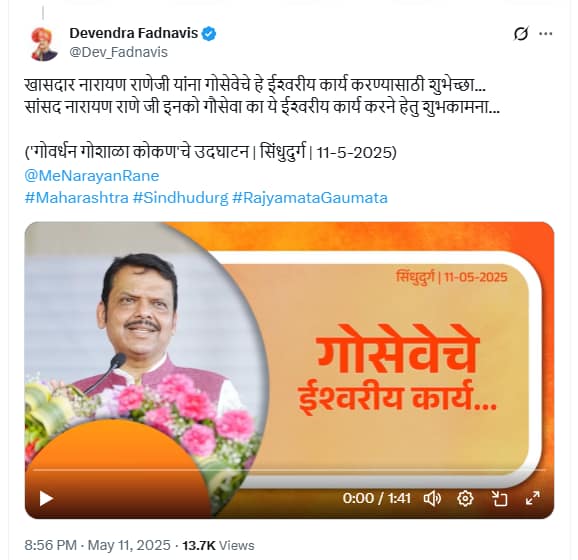
This scheme was announced in the 2016-17 budget speech and began implementation across the state in 2017-18. A subsidy of ₹1 crore was provided for the construction of a cowshed in each rural district. The scheme’s objectives were multiple, including the production of organic fertilizer, dung, medicines, and other products from cow dung and urine, as well as promoting research. To implement the scheme more effectively, a modified version was decided in 2019. Additional subdivisions were included, and each cowshed was planned to be provided with a subsidy of up to ₹25 lakh in phases. However, due to challenges such as elections, President’s rule, and the COVID-19 pandemic, the scheme was temporarily halted. Finally, in July 2022, after the Mahayuti government returned to power in the state, it was decided to relaunch the scheme on May 17, 2023. It was launched in a new and more comprehensive form from the financial year 2023-24. It was decided to build a cow shelter in every taluka of the state and give a grant of Rs 15 to 25 lakh to each cow shelter depending on the number of animals in the cow shelter.
Status of Rajyamata for indigenous cows
The Maharashtra government has officially granted indigenous cow breeds the status of “Rajyamata-Gomata” (State Mother Cow). This was a historic decision by the government led by cow protector CM Devendra Fadnavis in recognition of the cultural, socio-economic, and scientific significance of indigenous cows, and also to protect and care for them. The government decision giving this status to indigenous breeds of cows was issued on September 30, 2024. It considered all aspects, including the place of indigenous cows in Indian culture, the nutritional value of their milk, their use in the Panchagavya system of medicine, and the important role of cow dung and urine in organic farming. The protection, breeding, and conservation of local breeds such as the Dewani of Marathwada, the Khillar of Western Maharashtra, the Gavalau of Vidarbha, and the Dangi and Lalkandhari of Northern Maharashtra have also become an important part of these policies.
Pure Desi Cows Protection and Conservation Day
Given the continuously declining population of indigenous cows in the state, their protection and conservation has become the need of the hour. The Devendra Fadnavis government is making special efforts to effectively utilize modern technology to increase the productivity and fertility of indigenous cows. It is equally important to educate the public about the importance of preserving indigenous cattle and encourage cattle breeding and rearing. With these objectives in mind, the Devendra Fadnavis government has decided to celebrate July 22nd every year as ‘Pure Desi Cows Protection and Conservation Day.’ This will spread awareness and highlight the importance of indigenous cattle.
Initiatives by the Devendra Fadnavis government to highlight the importance of breeding, rearing, and conservation of indigenous cows from not only the religious but also the economic and scientific perspectives have started bearing fruit, as more and more people in villages are taking to indigenous cattle rearing as a profession and also for organic farming.